Cavity wall insulation near me is one of the most searched phrases in UK home improvement. There is good reason for that. Finding a local, qualified installer quickly makes the difference between a home that is warm by winter and one still waiting for a survey date in November.
Late summer is the ideal moment to start that search. However, most homeowners wait until the weather turns cold before thinking about insulation at all. For example, many only start searching once the heating bill arrives in November. By then, local installers are already deep into their busiest season. As a result, appointment slots fill up fast.
Why Search for Cavity Wall Insulation Near Me Now
Cavity wall insulation does not depend on dry weather in the same way that render based systems do. This is because the work happens inside the wall cavity itself. Even so, installers still face a seasonal surge in demand every autumn. As a result, booking now avoids the queue that builds once the weather turns.
A local search for cavity wall insulation near me typically returns several options within a similar radius. Because these installers serve the same catchment area, their diaries fill at a similar pace. Therefore, checking availability with two or three local firms in July or August gives a much wider choice of start dates. Waiting until October narrows that choice considerably.
What a Cavity Wall Survey Involves
Before any installer fills your cavity, they need to confirm your home is suitable. A surveyor checks the wall type first. Cavity fill only works on homes with a genuine cavity between two masonry skins. Most UK homes built after the 1920s have this construction.
The surveyor then checks for existing damp, cracked pointing, or exposed brickwork. Any of these issues could let water into the cavity once it is filled. If they are present, they usually need fixing before installation can go ahead. In addition, the surveyor checks wall thickness and cavity width. This confirms which insulation material suits the property best.
This whole process typically takes under an hour. Therefore, a quick search for cavity wall insulation near me and a booked survey can turn into a confirmed installation date within a few weeks. This is possible provided you act before the autumn rush begins.
How the Installation Itself Works
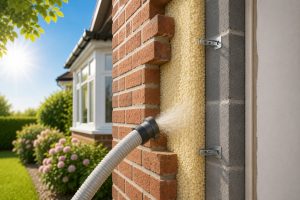
Once approved, installation is usually completed in a single day for an average semi detached home. The installer drills a pattern of small holes into the external wall at regular intervals. Insulation material, typically mineral wool beads or blown fibre, is then injected into the cavity through these holes.
After the cavity is filled, the installer seals each hole with a sand and cement mixture that matches the existing brickwork. Because the work is contained to the external wall face, there is minimal disruption indoors. As a result, most households do not need to move furniture or vacate rooms during the process.
Checking Credentials Before You Book
Not every business offering cavity wall insulation near me searches is equally reliable. Since cavity wall insulation carried out badly can trap moisture and cause damp, checking credentials matters as much as checking price.
Confirm the installer holds CIGA registration, which provides a 25 year guarantee on the work. In addition, check they are TrustMark registered if you plan to claim support through ECO4 or the Warm Homes Plan. A reputable local installer will have both without hesitation.
Ask, too, how they assess wall exposure. Homes in areas with heavy driving rain, especially coastal or north facing walls, sometimes need a specific insulation material. This helps avoid damp problems later. A good surveyor raises this during the visit rather than after installation.
Questions to Ask Before Booking
A short conversation before booking can prevent problems later. Ask each installer how long their current waiting list runs. In addition, this tells you whether a late summer booking will actually finish before winter, rather than simply confirming a distant date.
In addition, ask what insulation material they recommend for your wall type and exposure. Since some materials suit exposed coastal walls better than others, a good installer will explain their choice rather than default to whichever product they stock most.
Finally, confirm what the guarantee covers, and for how long. Most CIGA backed installations carry a 25 year guarantee. However, it is worth confirming in writing before work begins. In addition, ask whether the guarantee transfers to a new owner if you sell the property.
Regional Demand Affects Waiting Times Too
Waiting times for cavity wall insulation near me searches vary by region. Areas with a high number of 1930s and postwar semi detached homes have more installers competing for work. This applies especially across much of the Midlands and the South East. Therefore, choice is often wider in these areas than in regions with fewer suitable properties.
However, even in areas with plenty of installers, autumn still brings a genuine surge in demand. Therefore, checking availability now, rather than assuming a wide choice will still exist in October, remains the safer approach regardless of where you live.
What Booking Early Actually Changes
Booking a cavity wall insulation near me search into an actual survey during late summer changes more than just your place in the queue. It also means installation can finish well before the coldest part of the year. Therefore, the insulation is doing its job through the first proper cold snap, rather than being installed halfway through it.
In addition, some local installers offer better pricing during quieter months to keep their teams busy between the summer lull and the autumn peak. Therefore, a homeowner who books in July or August may find slightly more flexibility on price than one calling in October.
Costs and Support Available
Cavity wall insulation remains one of the most cost effective insulation upgrades available. A typical semi detached home costs between 1,500 and 3,000 pounds to insulate. The payback period through lower energy bills is often under five years. For a full comparison of cavity fill against solid wall approaches, our guide to cavity wall insulation covers both in detail.
If your home has solid walls instead of a cavity, our sister site ecoinsulation.co.uk has a complete guide to external wall insulation systems covering the options available for solid walled properties.
For official guidance on installer standards and what to do if a cavity wall insulation job goes wrong, Ofgem’s guidance on cavity wall insulation complaints is a useful reference to read before booking.
 Book Your Survey Before Autumn Arrives
A search for cavity wall insulation near me takes minutes. However, the payoff lasts for decades. Book a survey now, while local installers still have summer availability. Your home could be warmer well before the first cold snap arrives. Waiting until autumn only means competing with everyone else who left it too late.