The first question any UK homeowner faces when exploring wall insulation is a simple one: which type of wall do I have? The answer determines everything. Cavity wall insulation and solid wall insulation are not interchangeable. They apply to different wall constructions and involve entirely different installation processes. This guide helps you understand the difference clearly so you can take the right next step in 2026.
What Is a Cavity Wall?
A cavity wall consists of two separate layers of brick or block with a gap, or cavity, between them. This construction became standard in UK housebuilding from around the 1920s onwards and is the dominant wall type in properties built from the 1940s through to the present day.
The cavity was originally designed to prevent moisture from penetrating the inner wall. An uninsulated cavity also provides some thermal benefit over a single solid wall, but far less than a filled cavity. Most cavity walls built before the 1990s were left unfilled at the time of construction.
What Is a Solid Wall?
A solid wall is a single continuous layer of masonry with no internal gap. Solid wall construction was standard in UK housing before the 1920s. Victorian terraces, Edwardian semis, and many inter-war properties have solid walls.
A solid wall typically loses significantly more heat than an unfilled cavity wall, and far more than a properly insulated cavity wall. Without insulation, solid walls account for up to 45% of a home’s total heat loss.
How to Tell Which Type of Wall You Have
The most reliable method is to measure the thickness of your external wall at a window or door reveal. A cavity wall is typically 270mm to 330mm thick. A solid brick wall is usually around 220mm thick, or roughly the length of a single brick.
You can also look at the brick pattern on the exterior of the building. Cavity walls show a regular pattern of stretcher bricks, where the long face of the brick is visible. Solid walls often show a mix of stretcher and header bricks, where the short end of the brick faces outward. This header course binds the two layers of a solid wall together.
If you are unsure, your installer will confirm the wall type at the survey stage. It is a straightforward check that takes a matter of minutes.
How Cavity Wall Insulation Works
Cavity wall insulation involves injecting insulating material into the existing gap between the two layers of the wall. The installer drills a series of small holes in the external wall, injects the insulation through these holes until the cavity is full, and then fills the holes with matching mortar.
The most common materials used are mineral wool fibre, polystyrene beads, and foamed polyurethane. Each has different characteristics in terms of thermal performance, moisture resistance, and suitability for different cavity widths.
The process is relatively quick. A standard three-bedroom semi-detached house can typically be insulated in a single day. Internal disruption is minimal because all the work takes place from outside.
Cavity wall insulation is one of the most cost-effective energy efficiency improvements available. In 2026, the typical installed cost for a standard semi-detached property is between £1,500 and £2,500 before any grant funding. Many households qualify for fully funded installation under ECO4 or the Great British Insulation Scheme. You can check eligibility at gov.uk (https://www.gov.uk).
How Solid Wall Insulation Works
Solid wall insulation requires a different approach because there is no existing cavity to fill. Insulation must be added either to the outside of the building or to the inside face of the external walls.
External wall insulation fixes rigid insulation boards to the outside of the building and covers them with a protective render or cladding system. It delivers excellent thermal performance, causes minimal internal disruption, and has no impact on internal floor space. It is the preferred solution for most solid wall properties. For a full overview of external wall insulation, visit ecoinsulation.co.uk.
Internal wall insulation fits insulation boards or a stud frame filled with insulation to the inside face of the external walls. It is less expensive per square metre but reduces the internal floor area, requires full redecoration of each treated room, and means moving radiators, sockets, and skirting boards. It is the appropriate choice for listed buildings and properties in conservation areas where external changes are not permitted.
Both options for solid walls cost significantly more than cavity wall insulation. External wall insulation for a standard semi-detached property typically ranges from £10,000 to £17,000 in 2026. Grant funding is available for qualifying households under ECO4 and the Great British Insulation Scheme.
The Energy Saving Trust provides up-to-date guidance on funding options at energysavingtrust.org.uk.
Which Delivers a Better EPC Rating Improvement?
Both types of wall insulation improve your EPC rating, but the scale of improvement differs.
Cavity wall insulation typically moves a property up by one band. A D-rated property with an unfilled cavity may reach C following insulation. This is a meaningful and cost-effective improvement.
Solid wall insulation, particularly external wall insulation, can move a property up by two or more bands. A property currently rated E or F with solid walls can often reach C or above following a full external wall insulation installation. The improvement is larger because the heat loss through an uninsulated solid wall is much greater than through an unfilled cavity.
For landlords facing the 2030 minimum EPC standard of C for new tenancies, solid wall insulation is often the single most impactful measure available. For more on EPC ratings and compliance, visit epccertificates.co.uk (https://www.epccertificates.co.uk).
What About Part-Cavity, Part-Solid Properties?
Some properties, particularly those built in the 1910s and 1920s, have a mix of wall constructions. The rear may be solid while the front is cavity, or vice versa. In these cases, a surveyor will assess each elevation separately and recommend the appropriate solution for each.
Do not assume your property is all one type. Always confirm with a professional survey before committing to any installation.
Is Your Cavity Already Filled?
A significant number of UK properties had their cavities filled in previous decades, often as part of earlier government schemes. If you are unsure whether your cavity is already insulated, your installer can check using a borescope, which is a small camera inserted through a drilled hole. This takes minutes and confirms the status of your cavity before any work is planned.
If your cavity is already filled but the insulation has settled, become damp, or was installed poorly, you may need remedial work rather than a new installation. A survey will confirm this.
For properties where floor insulation is also a priority alongside wall insulation, combining projects in the same season can reduce overall disruption. Visit floorinsulation.co.uk (https://www.floorinsulation.co.uk) for more on that option.
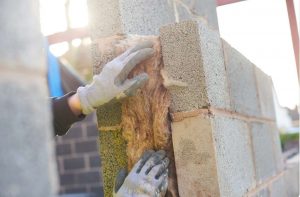
Cavity wall insulation
Whether your home needs cavity wall insulation or solid wall insulation, the first step is a professional survey. Contact us today and we will assess your property, confirm your wall type, check your grant eligibility, and give you a clear recommendation with no obligation.